24 Hours in Lima
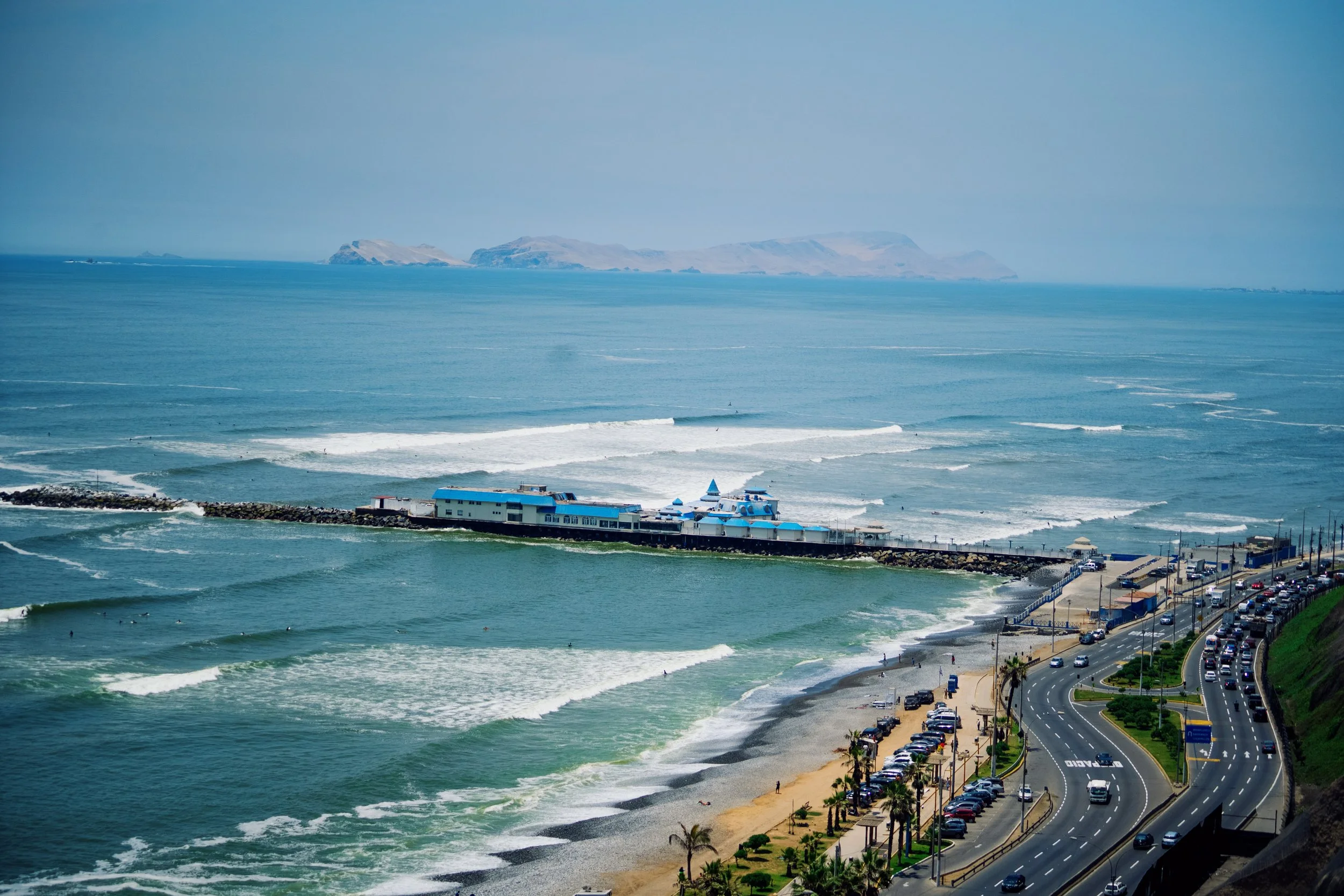
Somewhere on the journey from Mexico City to Lima, my nasty, wet cough became an outright cold. I had a short, twenty-four hours in Lima before boarding my flight to Cusco, so I was determined to make the most of the capital city. I landed at 6:00a, checked into my hostel, and made my way to the pharmacy for medical attention.
Having caught many a bug abroad, I learned la farmacia was the traveler’s first, best, and most cost-effective line of defense. My COVID test came back negative and the pharmacist recommended antibiotics, a chest expectorant, medicated eye drops… and lots of sleep. I ingested the chemicals on the walk home and crashed into a pile of sickness and exhaustion at the hostel.
I woke, hot, sticky, and disoriented, on my extra firm hostel mattress around 2:30p. I had a flurry of missed calls and messages. It was unlike me to not check in upon landing, so I had the American contingent in my life wondering what continent held my body, dead or alive. I sent proof of life messages and dragged myself through the motions of a hot shower. I pulled the white, plastic curtain back and steam billowed into the room. I stepped onto the cold, lacquered terracotta. A shiver ran up my spine. My body was slick. My hair dripped. It was wrapped in long, wet wisps around my neck. I felt clean and cold and brand new. It was time to find food.
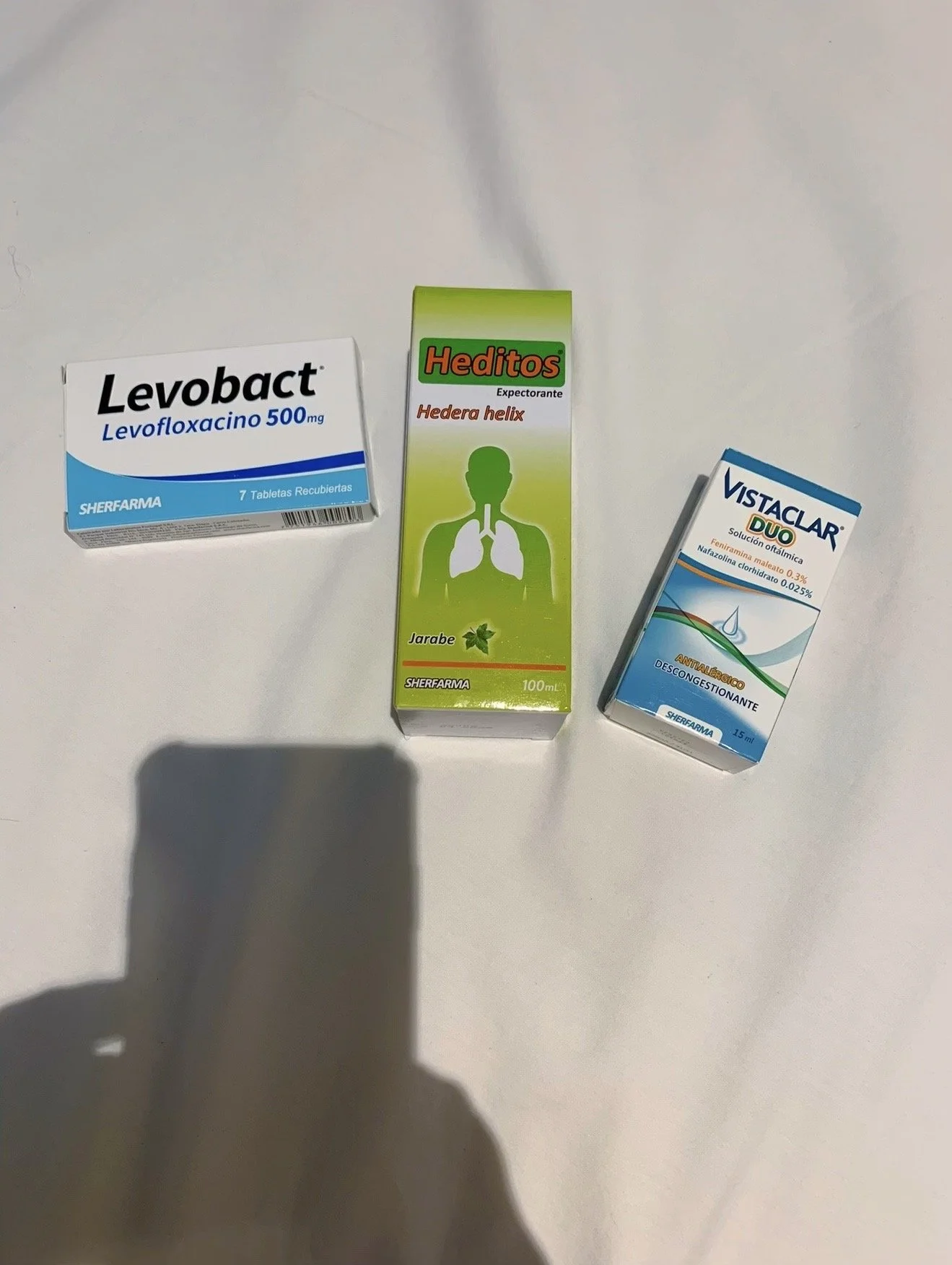
Proof of illness. Also… Peruvian medication packaging is… kind of a vibe???
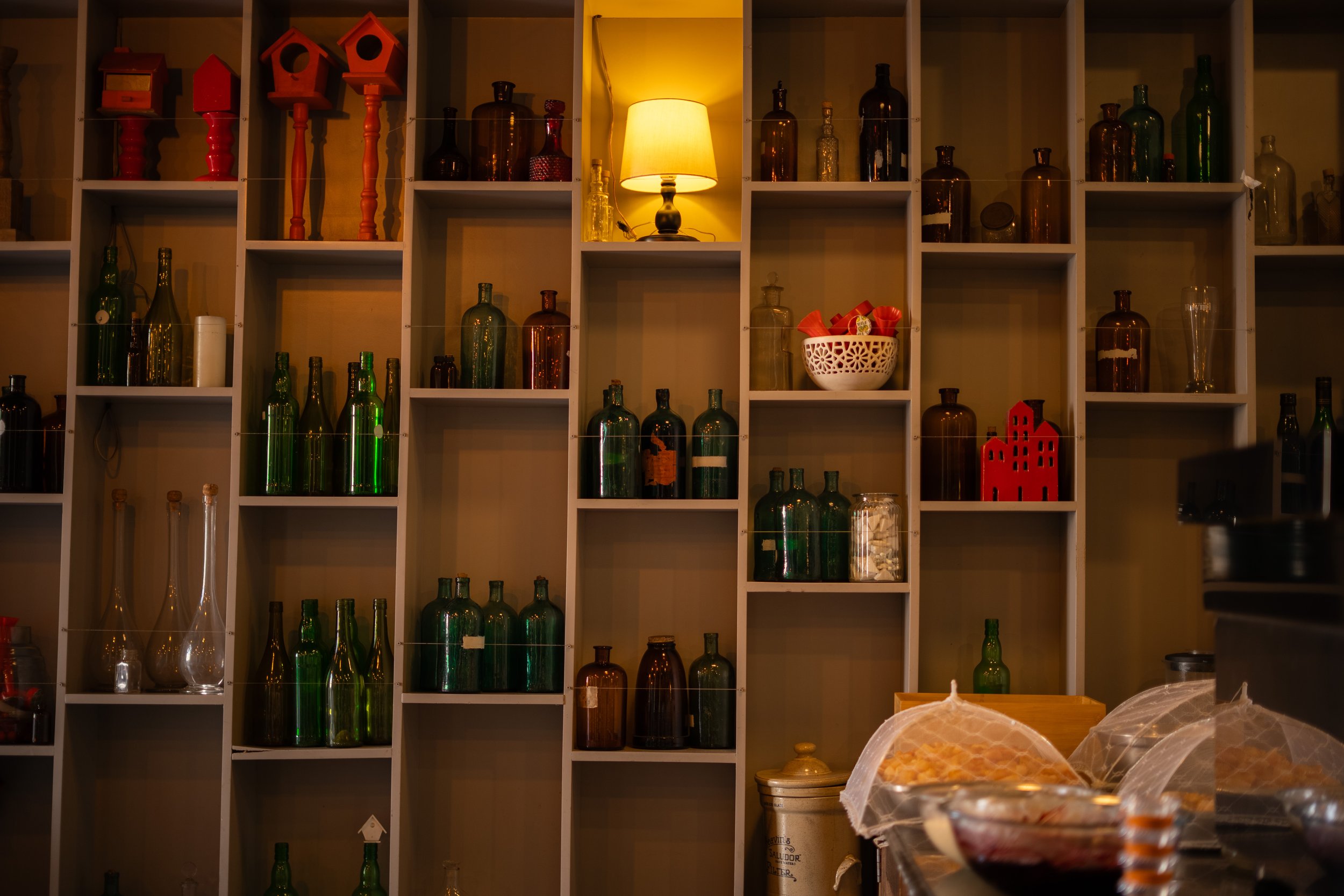
Isolina Taberna Peruana is one of those restaurants that ends up on every Lima travel list ever made. Think New York Times, Goop, and a gap year backpacker’s Substack. It’s widely considered one of the best restaurants in all of Latin America. For that reason, it’s impossible to land a reservation. In the weeks leading up to my trip, I attempted to get any reservation available: breakfast, lunch, dinner, you name it. Impossible. The tables were spoken for. This is how I learned that Isolina reservations were booked months in advance.
That being said, it was a weird hour and the restaurant was open. I reminded myself that I had twenty-four hours in Lima. Why not use twelve of those minutes trekking to Isolina while praying to the Peruvian Restaurant gods?! At 3:00p, the dining room was moody and half full. The waitstaff was surprised to meet a solo, female traveler without a reservation, and without shame. I was happy to beg on the sidewalk for a table and a hot meal with a side of plátanos. No tables were available (visually, half were available), and much of the waitstaff was on lunch, but they would make space for me at the bar. God Bless America, the Peruvian Restaurant gods, and the hospitable waitstaff at Isolina Taberna Peruana!
I clambered up a tall, wooden stool and unpacked my tech on the white-tiled bar. Eat, Pray, Lima is officially my first journey with a professional camera kit. I brought a Sony A7III, a standard, prime 50mm F 1.8 lens, and an extra heavy, long, 70-200mm F4 zoom lens, that will make my travel photos sparkle and bokeh. At the bar, I ordered two Peruvian classics: an Inca Kola and the Arroz Tapado con Huevo y Plátano Frito.
Inca Kola is Peru’s favorite bubblegum-flavored, fizzy, yellow beverage. Hate to be that girl, but the pictures just don’t do it justice! Inka Cola’s color is breathtaking. It’s what Mountain Dew wished it was. It’s your favorite soda’s favorite soda. It is “the golden cola,” but its color is as neon-yellow as tennis balls or construction site safety vests. If Inka Cola was a diamond, its clarity would be flawless. What a fascinating experience– to, for the first time, be an adult American, abroad, and in awe of a synthetic color forged by food chemists and Yellow 5. This, I imagined, is what it must feel like to be a non-American discovering Mountain Dew, or, a non-Texan stumbling upon Big Red for the first time.
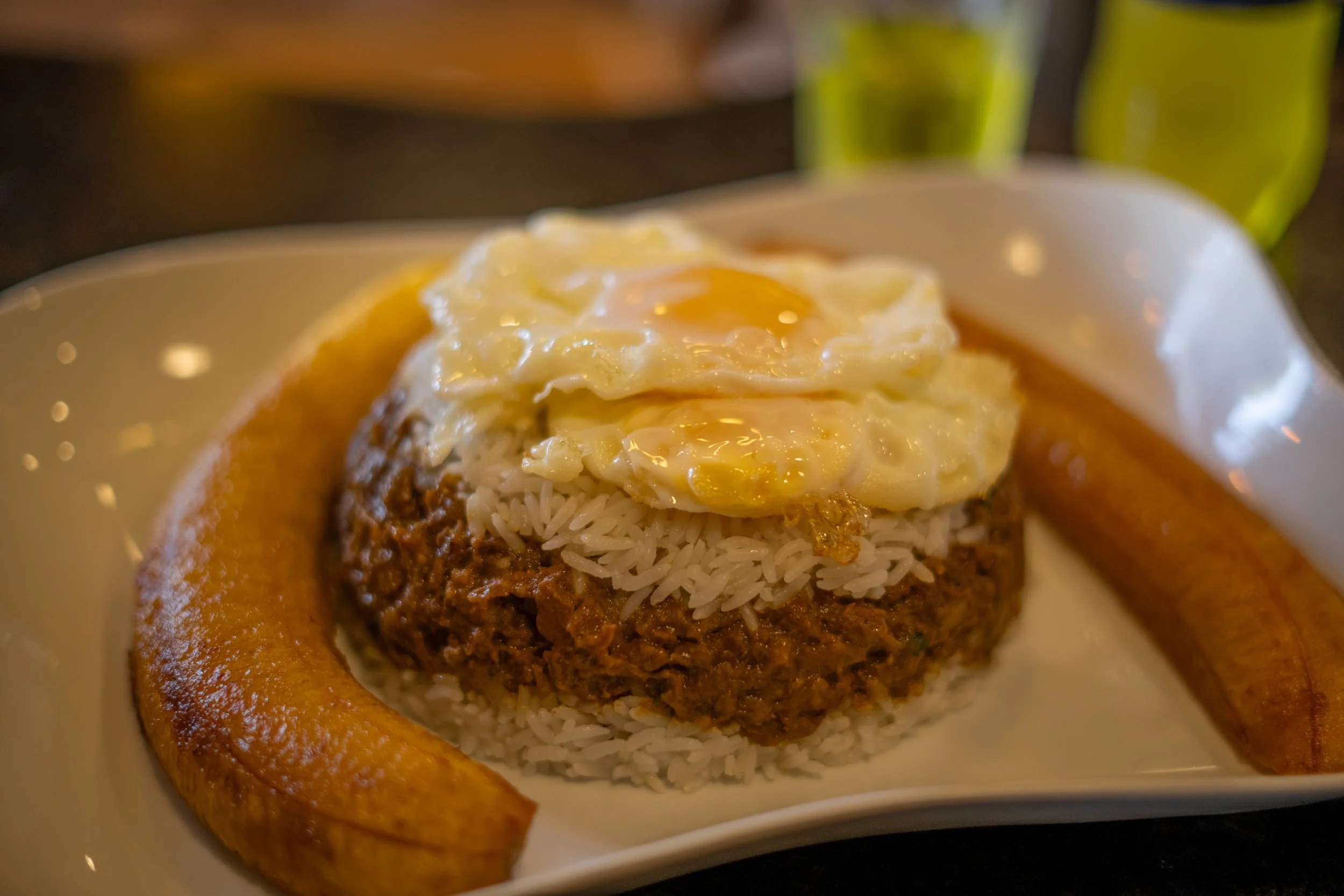
An Isolina special, and a Peruvian home cooked staple, the Arroz Tapado, arrived in short order. It consists of two, circular molded slabs of white rice “covering” a middle layer of minced beef, stewed in onion, garlic, carrots, tomato paste, and a Peruvian pepper, ají panca. The rice is topped with a fried egg, and each side is flanked by a halved plátano frito. To say I was brought back to life is an understatement.
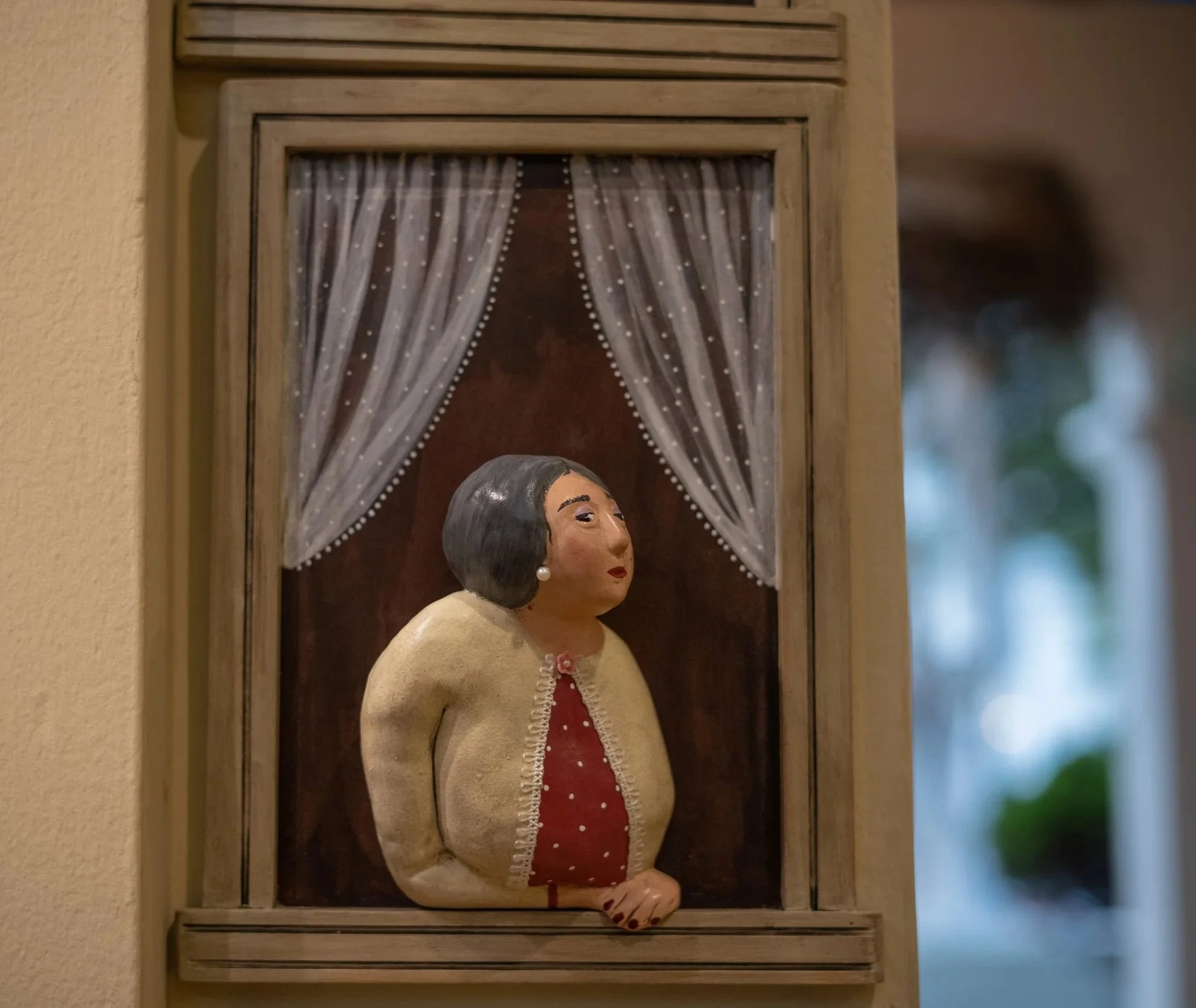
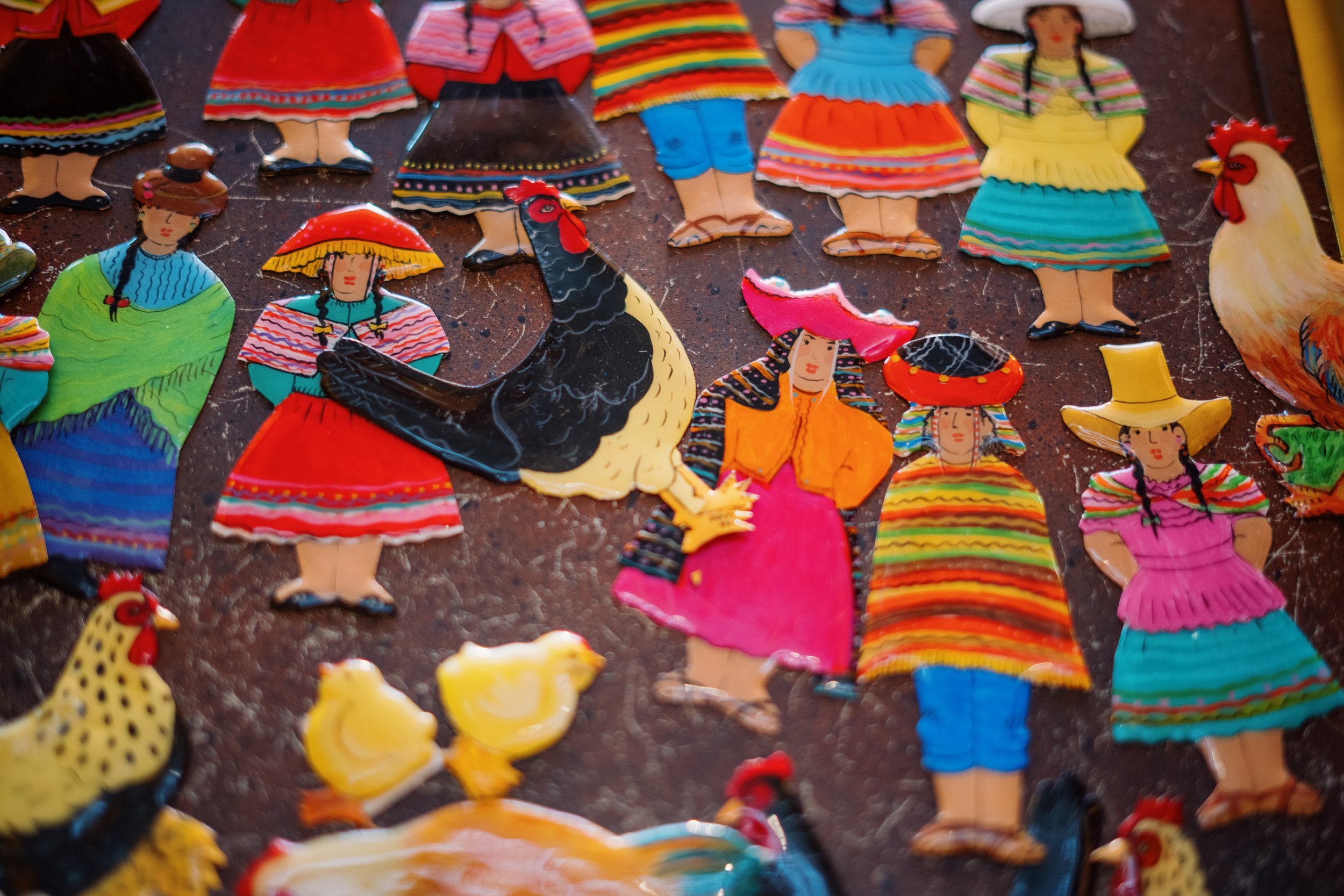
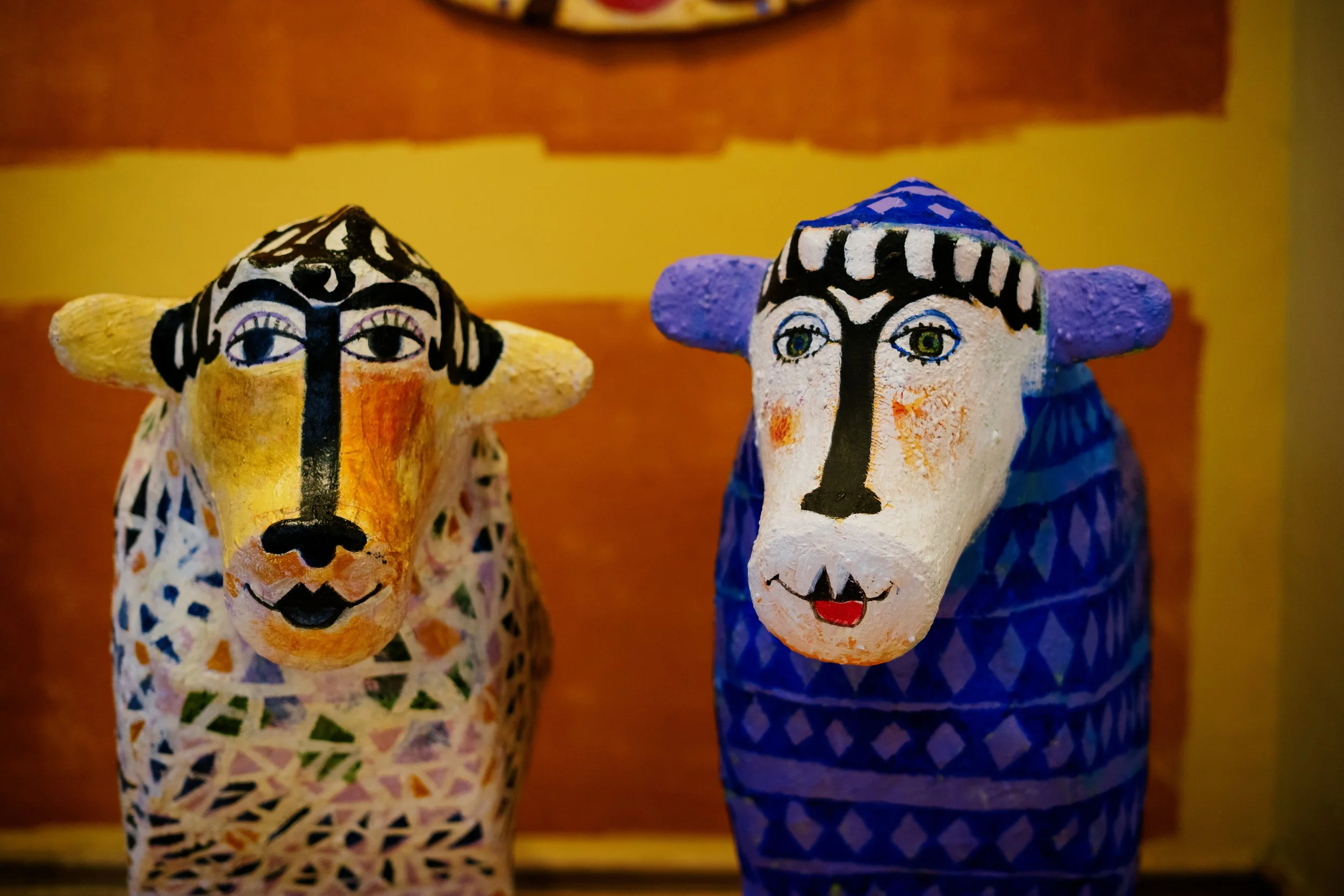
I have a colorful gallery wall in my dining room that often acts as my Zoom backdrop. It is made up of paintings, photographs, and handmade artisan handicrafts from my travels. That means I can’t leave a city without checking out the art scene. After dinner, I made the ten minute walk to Dédalo Arte y Artesanía in Barranco. Dédalo is a gallery that sells Peruvian crafts, home decor, clothing, accessories, jewelry, stationery, and art. It’s an inviting, expansive space that holds the work of imaginative Peruvian artists. Think paper mache sculptures, 3D paintings, handpainted magnets, ceramics, and alpaca sweaters and woven belts. I immediately fell in love with “Doña Visitación,” a 3D sculpture/painting of a nosey abuela hanging out of a window. She is a part of a collection called “Chismosas” (translation: gossips) by Isabelle Decencière. While there, I also picked up some handpainted magnets of indigenous Peruvian women, stationery, and miniature sculptures to bring home as gifts.
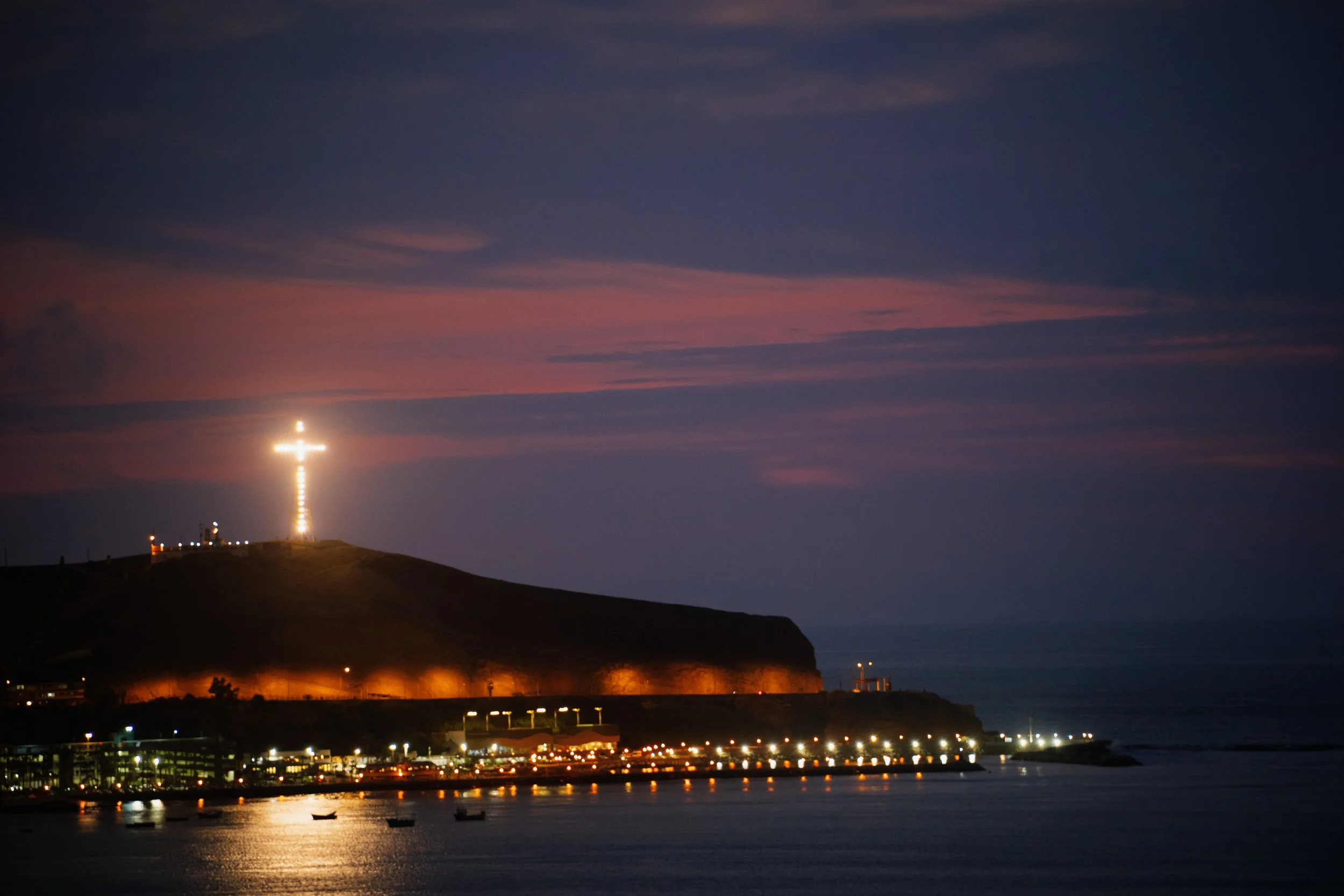
Unbeknownst to me, I’d spent hours inside Dédalo. The sun was setting on the Peruvian coast and the sky was painted technicolor pink, purple, and blue. I took in the tranquil scene as couples walked their dogs, friends shared scooters, and runners trotted down the boardwalk. I imagined what the air would feel like in Machu Picchu and snapped photos of the cotton candy sky and the dark hill holding a cross, glowing in bright yellow lights, across the water. For dinner, I had a bowl of icy-cold ceviche, garnished with healthy chunks of sweet potato and a tall pile of choclo, a large-kerneled corn native to the Andes. Not bad for a sick, single girl with 24 hours in Lima.
In just a few hours, I’d receive an email from LATAM Airlines, notifying me that my flight to Cusco was canceled. Pedro Castillo, the first indigenous President of Peru, was impeached and protesters took over the airport. A general strike had been declared in Cusco and in the Apurimac region indefinitely.